Nevis Geothermal Project Moves Closer to Drilling: What It Could Mean for the Island
Nevis’s plan to generate electricity from the heat beneath the island has moved a step closer to drilling. On 6 October 2026, Premier Mark Brantley met representatives of Iceland Drilling and the engineering firm COWI, and the visitors inspected the planned drilling site at Hamilton. Drilling has not started. Civil engineering and water works still have to be completed. The latest announcement gives no revised drilling start or completion date.
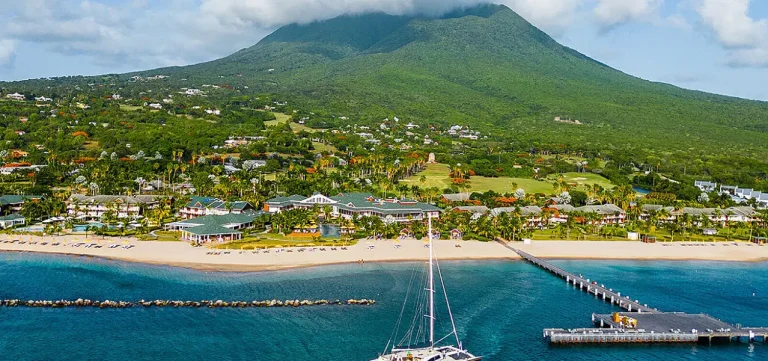
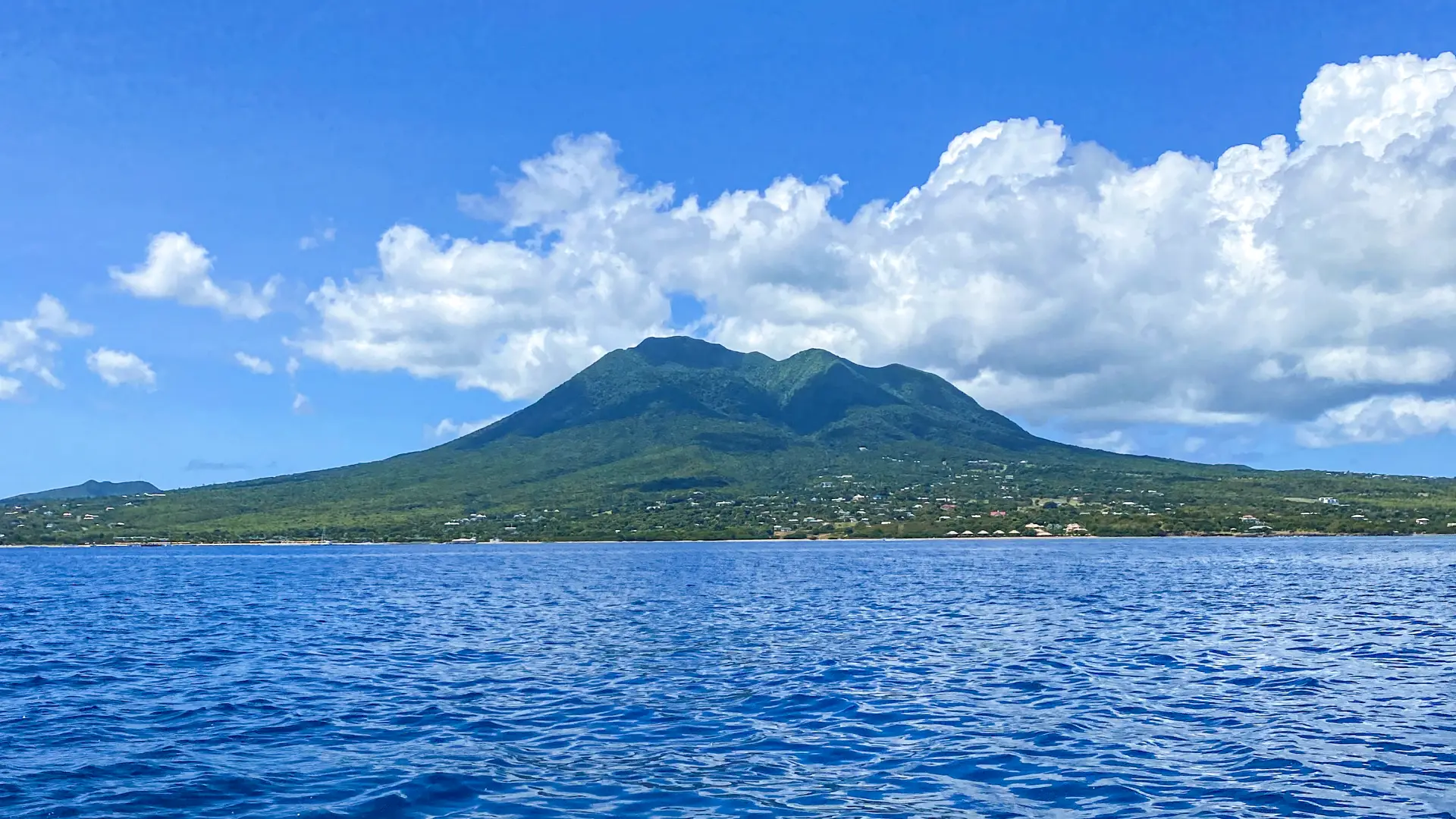
The photograph at the top of this article shows Nevis Peak from the sea. It is not the Hamilton drilling site.
What happened on 6 October
The Nevis Island Administration (NIA) announced the meeting on 7 October. Premier Brantley, who is also Minister of Energy, received an update on drilling preparations at his office at Pinney’s Estate. He was joined by Thorri Bjorn Gunnarsson, a civil engineer with COWI; Egill Arnar Sigurthorsson, project manager for Iceland Drilling; Nelson Ald Stapleton, general manager of the Nevis Electricity Company (NEVLEC); and Wakely Daniel, Permanent Secretary in the Premier’s Ministry.
According to the NIA, the meeting reviewed progress, looked at outstanding challenges and discussed ways to speed up the work. The visiting representatives also inspected the drilling site at Hamilton ahead of civil works on the well pad, the prepared platform on which the drilling rig will stand.
Where the project stands now
The project is in its preparation stage, before drilling. The main roles are settled: Iceland Drilling Company will carry out the drilling, and COWI is responsible for the civil works on the well pad. The NIA leads the project and NEVLEC is the executing agency.
Earlier milestones this year include:
- May 2026: the NIA announced that the drilling contract had been signed with Iceland Drilling.
- Late August 2026: the drilling rig, a Drillmec HH-300 known as “Týr”, underwent an independent inspection at Iceland Drilling’s facility in Iceland, attended by NEVLEC staff. Premier Brantley described the inspection as the final pre-condition for mobilising the rig. Soil testing and other technical assessments began at Hamilton the same week.
- Early September 2026: NEVLEC said the remaining steps included closing out the inspection findings, completing maintenance on the rig, advancing the well-pad works and then mobilising the rig to Nevis.
The 6 October visit came before the well-pad works begin. In other words, the Hamilton site is being prepared to receive the rig; it is not yet ready for drilling.
Geothermal exploration on Nevis is not new. A previous developer drilled and tested a well at Hamilton between late 2017 and March 2018. The current campaign is a separate, government-led project.
What still needs to be done before drilling
Premier Brantley summed up the position plainly: “the civil works need to be done, the water works need to be done.” The civil works centre on building the well pad at Hamilton. The announcement does not describe the scope of the water works or say how water will be supplied to the site.
The Premier also said the lengthy processes of multinational funding agencies have slowed the project, and that he is looking for a way around this.
What officials say about the rig and the start of drilling
The 7 October announcement says the rig is expected to be mobilised to Nevis “in the near future”. It gives no shipping date, arrival date or drilling start date.
Earlier timetables have already slipped. When the drilling contract was announced in May, Iceland Drilling’s schedule had drilling beginning by September 2026, with completion expected in the second half of 2027. At the end of July, Premier Brantley told a press briefing that the rig had originally been expected to be mobilised in August and that only a small change to that timeline was expected. On 1 September, WINN FM reported that drilling was expected to begin within 60 days.
As of 7 October, the rig had not been mobilised and the well-pad civil works had not begun. The 7 October announcement does not provide a revised timetable. Until the NIA or NEVLEC confirms dates, any arrival or drilling date should be treated as unconfirmed.
Why geothermal electricity could matter to Nevis
Nevis is a volcanic island, and heat deep underground can be used to generate electricity. Unlike solar and wind power, it does not depend on the weather or the time of day.
The plan is for a geothermal power plant of about 30 megawatts at Hamilton. The NIA has said this would be more than enough to meet Nevis’s domestic electricity demand, and Premier Brantley has said the plant would supply affordable electricity to both St Kitts and Nevis. In its statements, the NIA says the project would reduce the two islands’ reliance on imported fossil fuels and strengthen the Federation’s energy security.
In May, the NIA said the project was backed by about US$71.6 million in international financing. ZIZ reported in July that this comprises about US$51.6 million from the Green Climate Fund, the Caribbean Development Bank and the Inter-American Development Bank, plus US$20 million from the Saudi Fund for Development. In August the NIA said it had already paid about US$6 million to Iceland Drilling. Separately, the European Union has said it is ready to mobilise financial support, possibly through concessional loans and investment grants, though no amount has been announced.
These benefits are still prospective. The power plant has not been built, and the wells must be drilled and tested before it can be. No date has been given for when geothermal electricity might first reach customers.
Nevis’s volcanic landscape and the hot springs
The same volcanic geology lies behind one of the island’s best-known visitor attractions. The Nevis Hot Springs in Bath Village, just south of Charlestown, are natural warm pools beside the historic Bath Hotel. Our guide to the Nevis Hot Springs and the Bath Hotel covers what to expect, how to get there and admission.
The hot springs are a separate site and are not part of the electricity project. The Hamilton drilling site is a work site, not a place to visit, and none of the announcements mentions any change to the hot springs.